What Is an AI Learning Assistant, and How Does It Support Students and Teachers?
ففريق كرافتا··6 min read
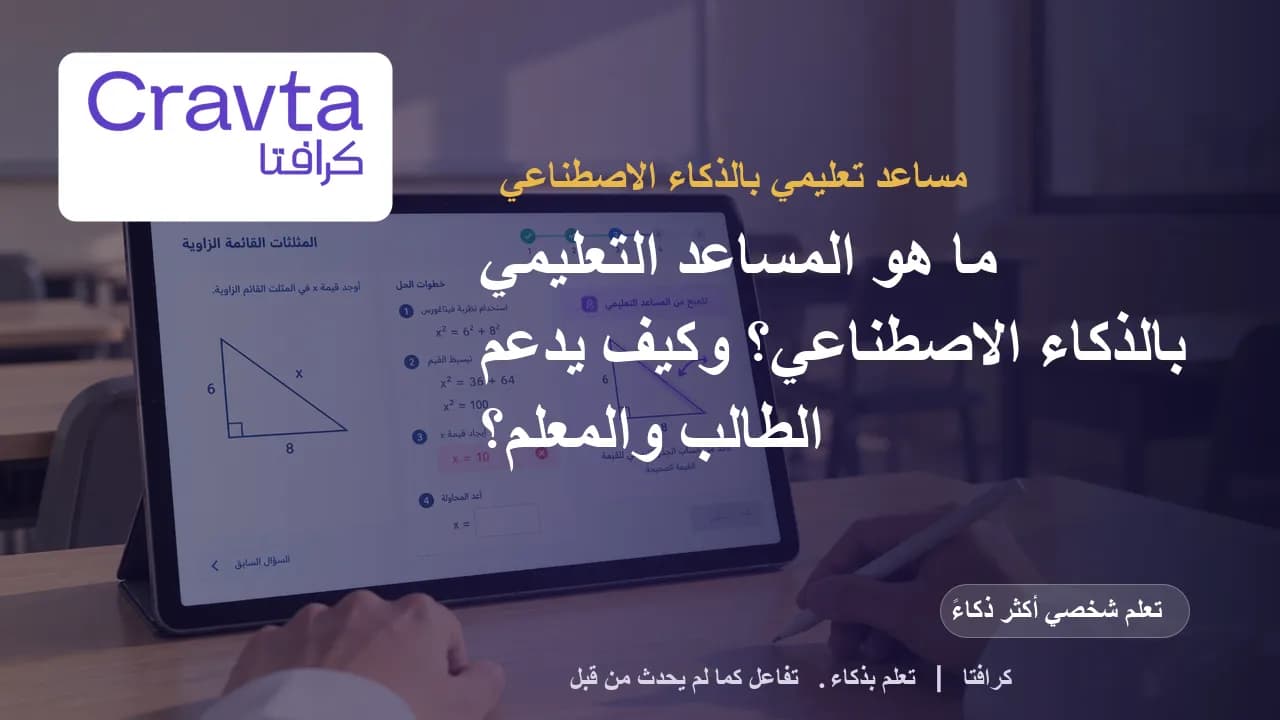
An AI learning assistant is an interactive tool that helps learners ask questions, explore explanations, and continue working when immediate support is not available. Its value is not in replacing the teacher or giving students finished answers. Its value is in offering timely guidance that helps the learner understand a concept, identify the next step, and stay engaged.
What can an AI learning assistant do?
A well-designed assistant can explain the same idea in more than one way, provide a simpler example, suggest a question for reflection, or guide a student through a difficult step. It can also help teachers save time by supporting routine explanations while they focus on feedback, classroom relationships, and instructional decisions.
Clarify concepts using age-appropriate language.
Offer examples and practice questions.
Support self-paced learning outside class.
Encourage students to explain their thinking.
Help teachers identify common areas of confusion.
Support, not substitution
The assistant should not remove productive struggle. If it immediately supplies a complete answer, the student may finish the task without learning. Better interactions use prompts, hints, and questions that move the learner forward while keeping the thinking with the student.
Teachers remain responsible for setting learning goals, choosing suitable activities, interpreting student performance, and deciding when a learner needs direct human support. AI can increase access to explanations, but it cannot replace professional judgment or the trust built in a classroom.
How schools can introduce it responsibly
Define the learning problem the assistant should solve.
Start with a limited group or subject.
Set clear rules for acceptable use.
Review sample conversations and student feedback.
Measure whether understanding improves, not only usage.
Privacy and accuracy also matter. Students should learn that AI responses may be incomplete or incorrect and must be checked against trusted learning materials. Schools should review how data is handled and avoid entering unnecessary personal information.
How Cravta supports the learning journey
Cravta combines interactive learning activities, short assessments, performance insights, and smart support in one experience. Schools can connect AI-supported explanations with measurable activities instead of treating the assistant as an isolated chatbot. Learn more about AI for teachers and educational data analysis.
Frequently asked questions
Does an AI assistant replace the teacher?
No. It supports practice and explanation while the teacher remains responsible for instruction and decisions.
Can students trust every response?
No. Responses should be evaluated and checked against reliable sources and class materials.
What is the best first use?
Begin with a clear, limited use case such as concept clarification or guided revision.




An AI learning assistant is an interactive tool that helps learners ask questions, explore explanations, and continue working when immediate support is not available. Its value is not in replacing the teacher or giving students finished answers. Its value is in offering timely guidance that helps the learner understand a concept, identify the next step, and stay engaged.
What can an AI learning assistant do?
A well-designed assistant can explain the same idea in more than one way, provide a simpler example, suggest a question for reflection, or guide a student through a difficult step. It can also help teachers save time by supporting routine explanations while they focus on feedback, classroom relationships, and instructional decisions.
Clarify concepts using age-appropriate language.
Offer examples and practice questions.
Support self-paced learning outside class.
Encourage students to explain their thinking.
Help teachers identify common areas of confusion.
Support, not substitution
The assistant should not remove productive struggle. If it immediately supplies a complete answer, the student may finish the task without learning. Better interactions use prompts, hints, and questions that move the learner forward while keeping the thinking with the student.
Teachers remain responsible for setting learning goals, choosing suitable activities, interpreting student performance, and deciding when a learner needs direct human support. AI can increase access to explanations, but it cannot replace professional judgment or the trust built in a classroom.
How schools can introduce it responsibly
Define the learning problem the assistant should solve.
Start with a limited group or subject.
Set clear rules for acceptable use.
Review sample conversations and student feedback.
Measure whether understanding improves, not only usage.
Privacy and accuracy also matter. Students should learn that AI responses may be incomplete or incorrect and must be checked against trusted learning materials. Schools should review how data is handled and avoid entering unnecessary personal information.
How Cravta supports the learning journey
Cravta combines interactive learning activities, short assessments, performance insights, and smart support in one experience. Schools can connect AI-supported explanations with measurable activities instead of treating the assistant as an isolated chatbot. Learn more about AI for teachers and educational data analysis.
Frequently asked questions
Does an AI assistant replace the teacher?
No. It supports practice and explanation while the teacher remains responsible for instruction and decisions.
Can students trust every response?
No. Responses should be evaluated and checked against reliable sources and class materials.
What is the best first use?
Begin with a clear, limited use case such as concept clarification or guided revision.